
Standby power
Generator supply and installation in Nairobi, with automatic changeover
A generator should start when the grid fails and carry the loads you chose, without surprises. We size it to your real load, install it with proper switchgear and changeover, and keep it serviced.
Quick answer
Ultrateq Systems supplies and installs diesel standby and prime-power generators in Nairobi, Kenya, with automatic transfer switches (ATS) so power switches over within seconds of an outage. We size the generator to your actual load including motor starting surges, and handle housing, exhaust, fuel system and servicing.
Who this is for
- Homes with frequent outages and sensitive or essential equipment
- Offices, banks and shops that cannot stop trading when power drops
- Hotels, hospitals, schools and institutions
- Factories, workshops and farms with motors and cold storage
- Sites combining solar with a generator for long outages
What's included
- Load assessment and kVA sizing
- Supply of the generator set
- Automatic transfer switch (ATS) and changeover wiring
- Weatherproof housing, plinth and exhaust routing
- Fuel system arrangement and safety isolation
- Earthing and protection
- Commissioning and load testing
- Scheduled servicing
Why choose this service
Automatic protection
With an ATS the generator starts and takes the load without anyone being present.
Right-sized, not oversized
We size for starting surges and growth, so the set runs efficiently and starts your biggest motor.
Clean, safe installation
Correct housing, exhaust routing, earthing and fuel arrangement reduce fire, fumes and noise problems.
Works with solar
Generator and solar can share one distribution board, with solar and batteries covering daily use.
Types and options
Diesel standby generators
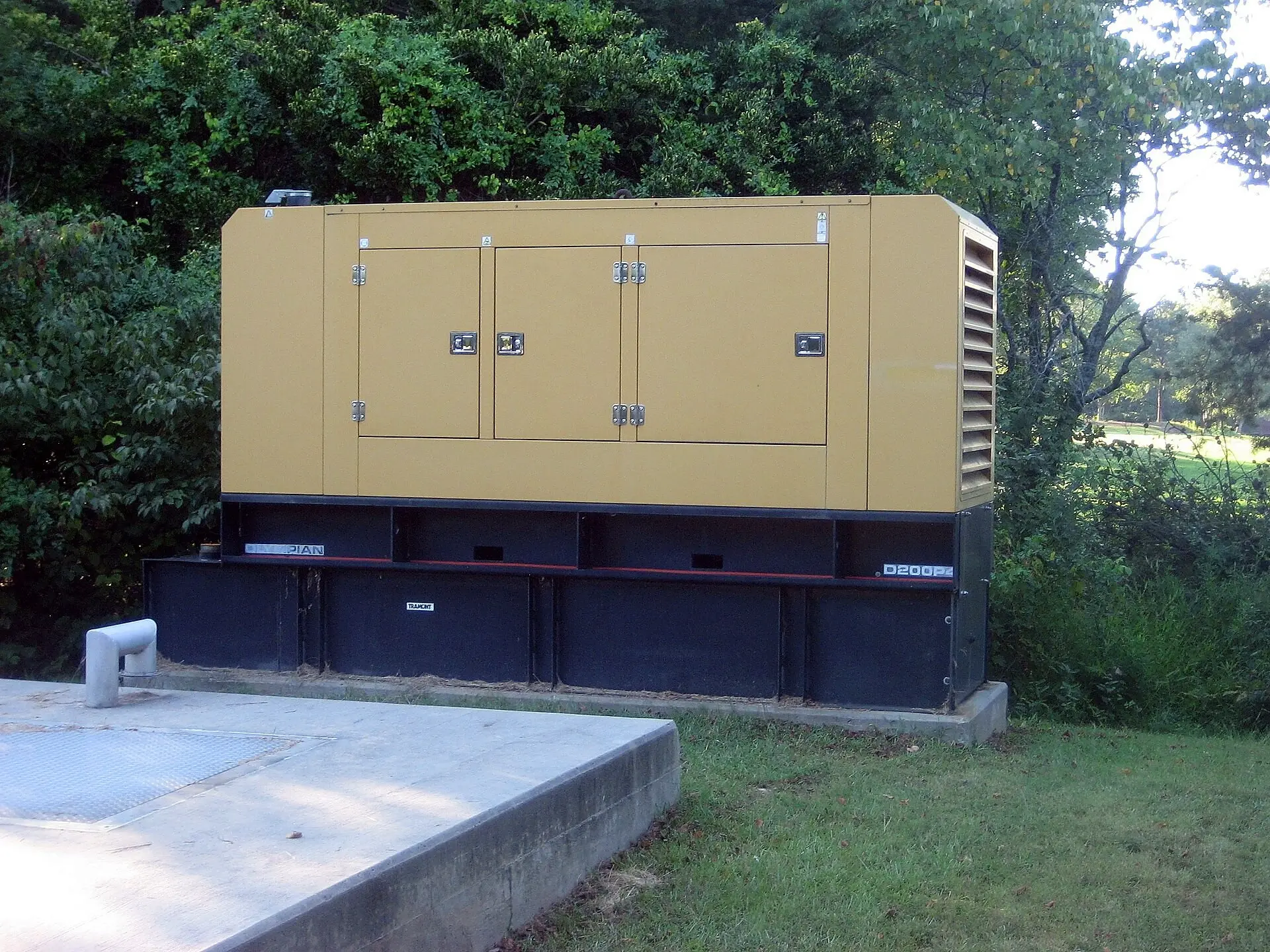
Fixed sets, often in a canopy, wired to an ATS. Built for hours of emergency running.
Best for: Homes, offices, hospitals and institutions.
Prime-power generators
Rated for continuous running where there is no grid or the grid is very unreliable.
Best for: Remote sites, farms and construction.
Portable petrol generators
Smaller, movable and manually started. Suitable for essentials, not for automatic backup.
Best for: Small shops and temporary needs.
| Load profile | Typical generator |
|---|---|
| Home essentials: lights, fridge, TV, router, few sockets | 5–7.5 kVA |
| Larger home with geyser, borehole pump or air conditioning | 10–20 kVA |
| Small office or shop | 10–20 kVA |
| Workshop or factory with motors | 20–60+ kVA, sized from the motor list |
Real sizing depends on the loads you want to keep running and on motor starting current. Always size from a load list, not a guess.
How we work
- 1
Load assessment
We list what must keep running, including motors, and calculate the running and starting load.
- 2
Selection and quotation
We recommend a generator size and specification and give an itemised quote.
- 3
Site preparation
Plinth, housing, ventilation, exhaust and fuel arrangements are planned for the location.
- 4
Installation and ATS
The set, changeover switch and cabling are installed and protected.
- 5
Commissioning and testing
We test start-up, changeover and load, then train you on operation.
- 6
Servicing
Scheduled servicing, oil and filter changes and test runs keep the set ready.
What affects the price
- Generator size (kVA) and brand
- Canopy (silent) or open set
- ATS and switchgear
- Distance between generator and distribution board
- Fuel tank size and plinth or housing works
- Servicing plan
Generator price rises quickly with kVA rating, so correct sizing matters. We quote after a load assessment.
Ask for a quoteFrequently asked questions
What size generator do I need?
Add up the load you want to run, convert watts to kVA (kVA = kW ÷ 0.8) and allow extra for motor starting surges. See <a href="/blog/what-size-generator-do-i-need/">What size generator do I need?</a> for a worked example.
Will the generator start automatically?
Yes, if installed with an automatic transfer switch. The controller detects the outage, starts the set and transfers the load, then switches back when grid power is stable.
Can a generator work with solar?
Yes. A common design uses solar and batteries for daily use and a generator for long outages or heavy loads. Both connect through one distribution board.
How often should a generator be serviced?
Follow the manufacturer schedule, typically based on running hours and at least annually. Standby sets should also be test-run regularly under load.
Diesel or petrol generator?
Diesel sets suit fixed standby and continuous use because they are durable and economical on fuel. Petrol portables suit light, occasional use.
Where should a generator be placed?
Outdoors or in a ventilated enclosure, on a level plinth, away from windows and air intakes so exhaust fumes cannot enter buildings. Never run one inside a closed room.
Guides related to generators
What Size Generator Do I Need? A Simple Sizing Guide
How to size a standby or portable generator: add up running and starting loads, allow headroom, choose single or three-phase and plan an ATS and fuel.
SolarOn-Grid, Off-Grid or Hybrid Solar? Which System Is Right for You
On-grid, off-grid and hybrid solar compared in plain language: how each works, what they cost relative to each other, what happens in a power cut, and who each suits.
ElectricalSingle-Phase vs Three-Phase Power in Kenya: Which Do You Need?
The difference between single-phase (240 V) and three-phase (415 V) electricity in Kenya, when you need three-phase, and how to upgrade a connection.
Talk to us about generators
Call, WhatsApp or send your details and we'll respond with a plan and a price.